
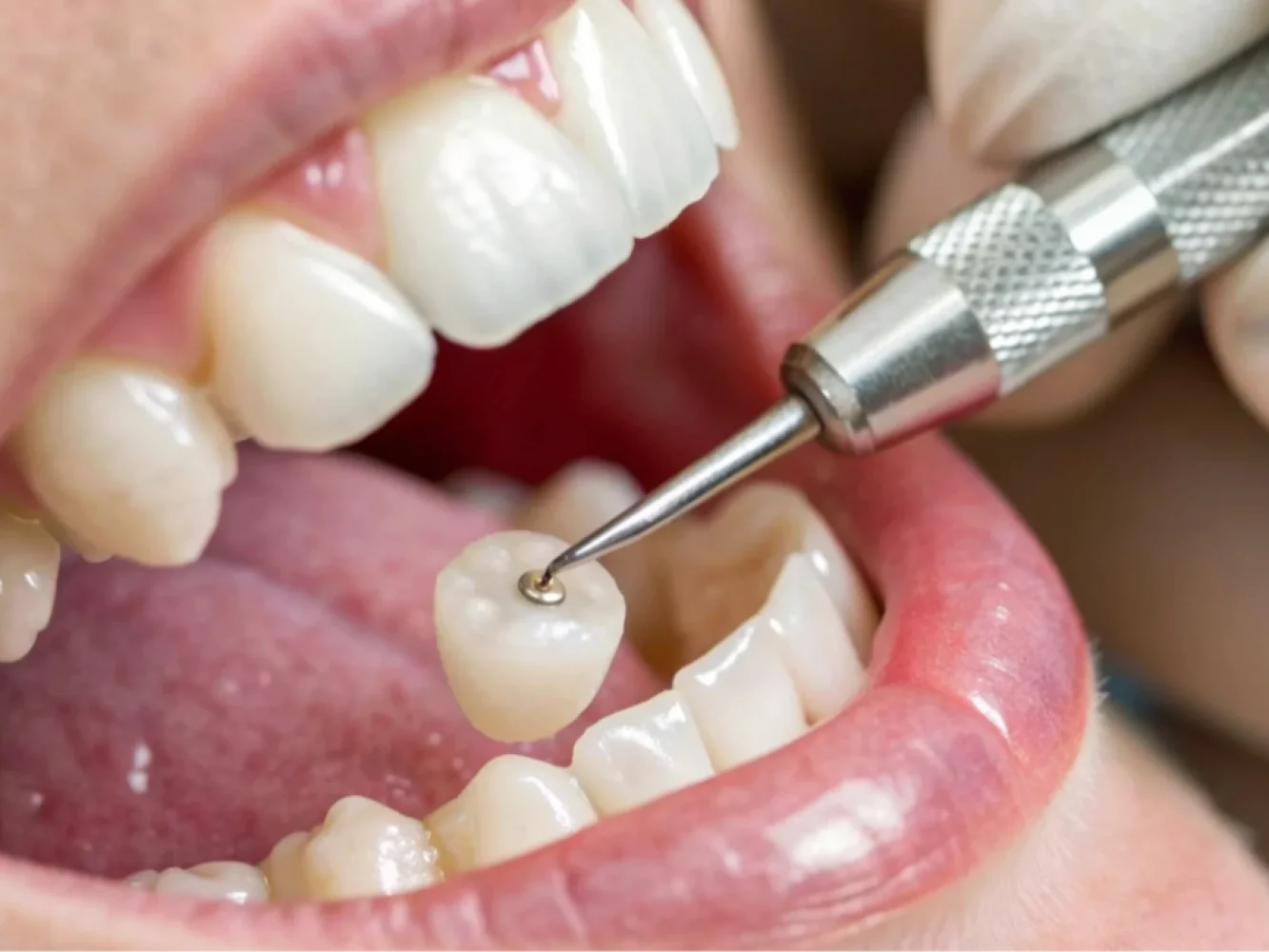

Restorative Dentistry
Direct placed restorative dentistry has one common denominator, whether alloy or resin, is the placement of rubber prior to the restorative procedure. All of our restorative materials must be placed in a dry environment to maximize the aesthetics and durability of the restoration. The choice in direct placed material boils down to durability and caries resistance verses appearance and tooth like feel. Composites or resin can be placed especially if wax up and index methods are used to create the appearance and feel of natural teeth. They do not have the compressive or shear strength, as does a well-placed alloy. Alloys tend to last about three times longer in part because besides stronger they are more decay resistance due to the silver content of the restoration which inhibits the bacteria. The use of the different materials is always part of the patient discussion and consent. The fabrication of crowns and bridges which are stronger than direct placed materials are now divided into two basic categories of cad or milled restorations as opposed to traditional hand lab tech fabricated. The former are less expensive but giving the patient about half the durability of the conventional lab-tech fabricate restorations.